How do we make sense of the religious iconography that we increasingly see as part of the CPI(M)’s visual identity in Kerala? Anagha looks at what it means for an atheist-secular political party to turn to religion for its imagery.
Read more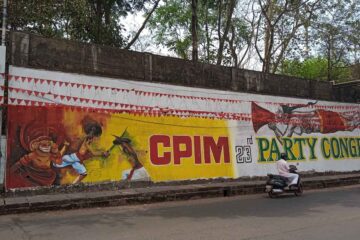
A Kerala Studies Blog

How do we make sense of the religious iconography that we increasingly see as part of the CPI(M)’s visual identity in Kerala? Anagha looks at what it means for an atheist-secular political party to turn to religion for its imagery.
Read more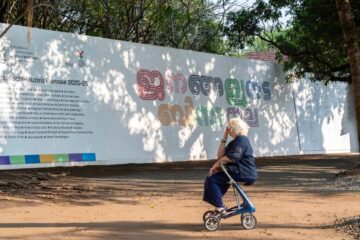
Jubin Abraham explores how the Kochi-Muziris Biennale reimagines Kochi’s colonial edifices as living archives of memory, where contemporary artistic interventions recover suppressed histories and open new possibilities for decolonial remembrance.
Read more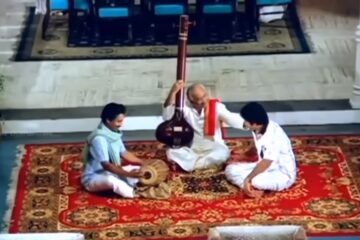
Offering new possibilities in reading film soundscapes, Namita assembles an illustrative archive to discuss how Malayalam cinema employs Carnatic music to “legitimise” bodies otherwise deemed subaltern.
Read more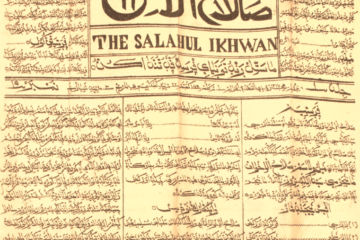
Islam’s relationship to images is widely discussed, often in ways that perpetuate Islamophobic stereotypes, erasing context, history, diversity, and change. Countering such popular narratives, Mohammed Sadik shows that conversations around image use in Malabar’s Muslim communities represents a long and dynamic history of debating and adapting Islamic principles to a changing world.
Read more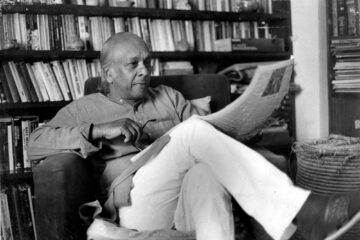
A retrospective in his native Kerala displays Abu Abraham’s many creative tensions – as cartoonist and parliamentarian, patriot and cosmopolitan[…]
Read more
തീരദേശ ജീവിതത്തെ അടയാളപ്പെടുത്തുന്ന കടൽപ്പാട്ടുകളെക്കുറിച്ചു ടിനോ തോമസ് എഴുതുന്നു.
Read more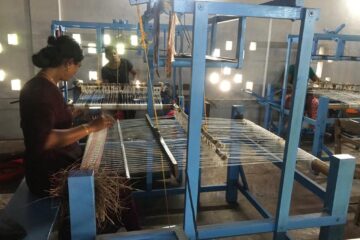
The art of weaving grass mats is fast disappearing from a small village in Kerala, yet eight women weavers hold the fort against rapidly changing economic conditions. What is at stake in keeping alive an art form that seems to have outlived its times? Aswathy delves into this universal question by telling the story of the Killimangalam pulpaya and its makers.
Read more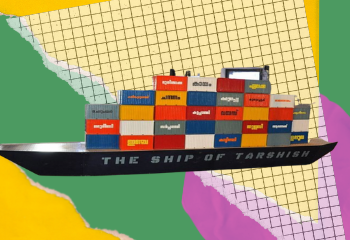
Nimmi brings together the Pattanam excavation and the subsequent cultural reimagination of Muziris to present how history and myth come alive through art.
Read more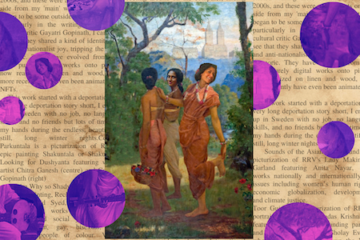
New York-based artist David Dasharath Kalal takes us through selections from his “Ravi Varma Recreational Vehicle”(RVRV) series combining the heavily reproduced work of Raja Ravi Varma, ever-familiar to the Malayali, with present-day South Asian Americans.
Read more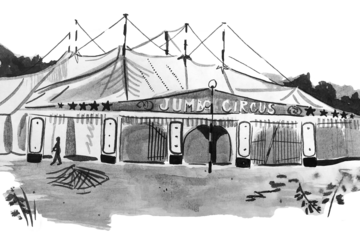
Accompanied by lively illustrations of her own, anthropologist Eléonore Rimbault takes us through the ways in which Kerala’s circuses are entangled with India’s history.
Read more