
Muhammed Fazlu Rahman
The Mappila rebellion of 1921 has been the subject of much debate and analysis in the historiography of Malabar. Colonial accounts at the time and popular discourse thereafter portrayed the rebellion solely as an instance of religious fanaticism. Fazal Rahman reviews Abbas Panakkal’s 2024 book, Musaliar King, which meticulously examines primary data to counter this image, showing instead that the rebellion was a milestone in anti-colonial resistance in India.
In August 1921, Malabar became the site of one of the most significant yet deeply contested uprisings in colonial India. For six months, Mappila peasants—predominantly Muslim tenant farmers who had endured generations of exploitation under an oppressive landlord system—rose in armed resistance against both feudal and colonial powers. This revolt emerged from a volatile post-Tipu Sultan landscape where the British had strategically preserved and intensified the janmi system, subjecting peasants to extortionate rents and arbitrary evictions. The colonial response, however, extended far beyond military suppression. British administrators and newspapers systematically framed the uprising as ‘Moplah outrages’, characterising Mappila Muslims as religious fanatics engaged in forced conversions and communal violence against Hindus. This interpretation served the empire’s interests perfectly: by recasting genuine anti-colonial and agrarian resistance as religious fanaticism, the British could justify their brutal crackdown while delegitimising the rebellion’s political dimensions. The narrative proved so powerful that it continued to shape post-independence historiography, leaving the rebellion’s true nature—whether peasant revolt, religious uprising, or freedom struggle—contested across academic and political lines even a century later. It is into this charged historical debate that Dr. Abbas Panakkal’s Musaliar King (2024) intervenes with a bold decolonial reinterpretation. The author challenges both colonial and postcolonial narratives as he disproves earlier accounts that framed the Pukkottur events1 as a ‘prelude to rebellion’, arguing instead that these were colonial fabrications. Panakkal draws from his work as a research scholar and historian affiliated with University of St. Andrews to cite colonial instances, historical events, and other literary evidence to support this argument.
The book is divided into two sections. Part one, ‘Mahatma Gandhi to Musaliar King: 1920–1922’, comprises chapters that expose colonial distortions of the 1921 Malabar Rebellion. By terming him as the ‘Musaliar King’, this part redefines Ali Musaliar2 as a symbol of anti-colonial resistance, acknowledging his contributions and countering colonial attempts to reduce him to merely a religious fanatic. In this section, Panakkal also adopts a feminist lens to center Mappila women’s roles in the movement, characterising them as ‘Moplah Amazons’ (chapter 2). He also critiques propaganda imagery and emphasises Hindu-Muslim unity during the revolt. Thus, Panakkal documented instances in which Hindu households sheltered Mappila rebels from British troops and local temples and mosques coordinated relief efforts for displaced families, demonstrating solidarity that colonial reports deliberately obscured. He dismantles British narratives while celebrating marginalised voices and their enduring legacy of solidarity. Part two, ‘Portuguese and British: 1498–1900’, traces anti-colonial resistance in Malabar from Portuguese arrival (1498) to the establishment of British rule. It explores early freedom struggles, the unifying legacy of Mamburam Thangal3 as a ‘celestial beacon’ (chapter 6), and Malabar Magistrate Connolly’s martyrdom4 as a turning point. The conclusion reflects on enduring communal solidarity and how post-resistance societies leveraged coexistence to counter colonial divides.
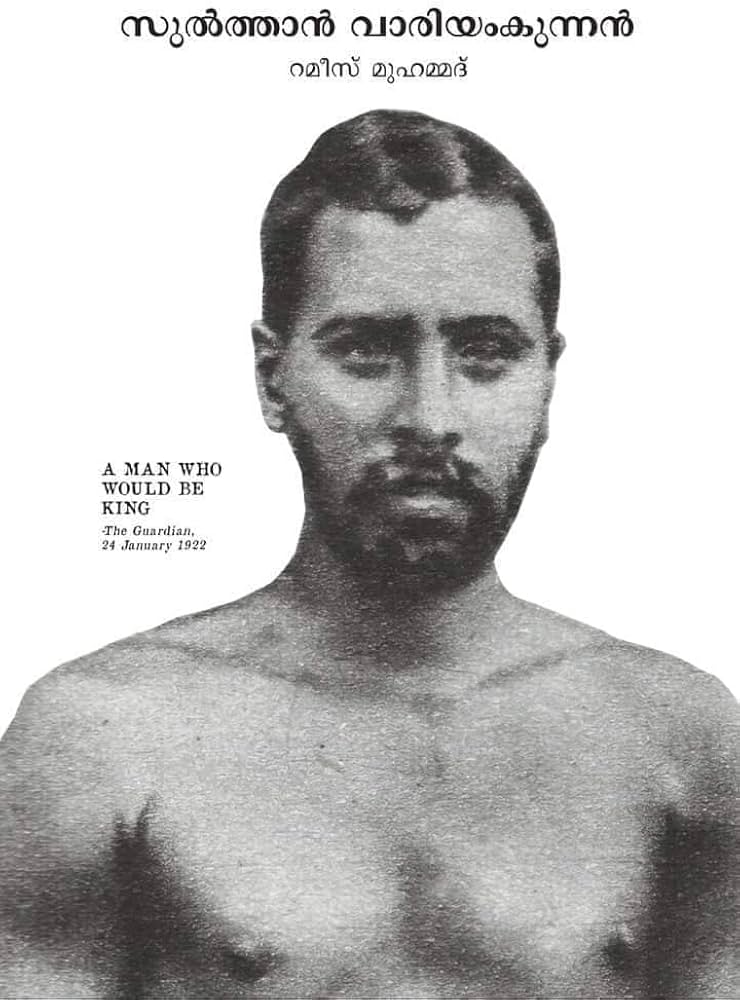
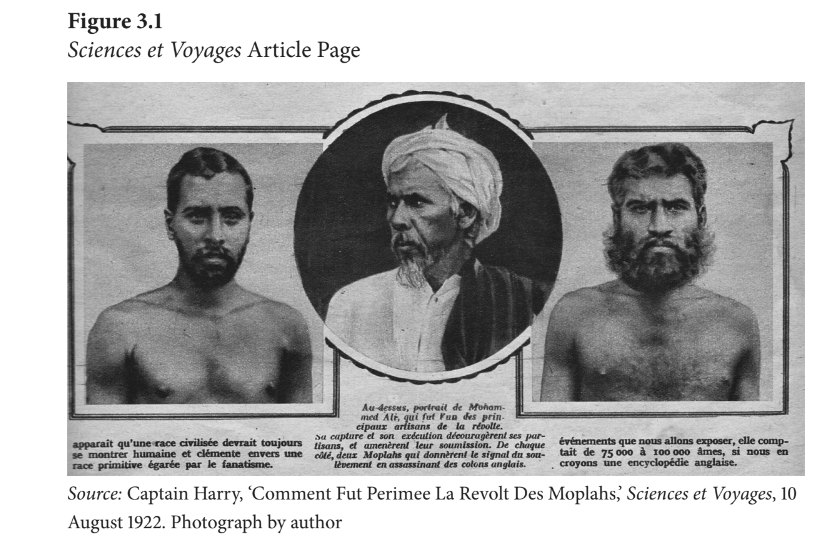
The basis of colonial rule is not only weapons and power, but also its cultural and historiographical dominance. Therefore, even after gaining independence, the colonised country has to deconstruct the history written in the past. This historian has carried out such an organic process while revealing how the media weaponised stereotypes in colonial films, showing that ‘British cameras lied twice: first by framing rebels as savages, then by erasing their humanity’ (chapter 3). Panakkal examines British documents, local accounts, letters, and diaries to reconstruct the tactics adopted in the historical construction of an armed movement which was the largest rebellion, struggle, and resistance that the British Raj ever confronted during their rule in the Malabar province. Another salient dimension of the book is its focus on the women’s contributions to Malabar’s revolt, presented in a special chapter (2), as he describes how Mappila women actively participated in the Pukkottur battle, chanting the war cry of ‘Allahu Akbar’ (God is great). Similarly, he narrated an incident of brutal violence took place at Melmuri-Adhikarithodi, where two girls were killed while protecting their loved one. One was an eleven-year-old girl who was beaten with a gun and killed while attempting to shield her father. Another is identified as Kadiyamu, who had come from her husband’s home to care for her elderly ailing father, Kunjeen Haji, and was killed by British troops when she attempted to prevent them from dragging him away. Panakkal also sheds pathbreaking light on a widely circulated picture of Variamkunnath Kunhamed Haji, a major leader of the movement5, through his exposition of new documentary evidence that challenges the photograph’s attribution to Variamkunnath. This new evidence reveals that the person in the image is, in fact, one among the two individuals with Ali Musaliar in the photograph from the August 1922 French magazine, Science et Voyages (chapter 3). These exemplify Panakkal’s decolonial methodology, restoring humanity, complexity, and political agency to Mappila historical actors that British colonial accounts and subsequent Savarna Hindu historiography intentionally erased.
Overall, the book takes the reader on a fascinating but occasionally exasperating journey informed by history and established scholarship on Malabar resilience. When Panakkal describes communal harmony in Malabar, especially between Muslim and Hindu communities (chapter 6), he cites Muslim ballads (Mappila pattukal) and mosque records, but he barely quotes evidence from Hindu accounts of the incidents, risking an imbalance in sourcing. Nevertheless, by using primary sources—such as colonial archives, unpublished personal manuscripts, and official records—the author strengthens the credibility of his account, as these materials help successfully debunk century-old misrepresentations found in earlier narratives. With The Ivory Throne, Manu S. Pillai focussed on the ruling family, whereas Panakkal takes the standpoint of unnamed grassroots rebels. Just as Roland E. Miller narrates Mappila agency in his work, The Mappila Muslims of Kerala, Panakkal in his Musaliar King also blends historical incidents with literary flair. With its creative research and powerful narrative, this is a must-read for historians, scholars, and anyone seeking a deeper understanding of colonialism, resistance, and the true history of Malabar.
References
- Dale, Stephen Frederic. 1980. Islamic society on the South Asian frontier: The Mappilas of Malabar, 1498–1922. Clarendon Press.
- Khan, Murtaza Ali. 2025. ‘Groundbreaking book “Musaliar King” exposes colonial atrocities and hidden agenda in Malabar’. A Potpourri of Vestiges (blog), 13 February 2025.
https://www.apotpourriofvestiges.com/2025/02/groundbreaking-book-musaliar-king.html - Kurup, K. K. N. 2025. കൊളോണിയൽ ചരിത്രരചനയും അപനിർമ്മിതിയും [Colonial historiography and deconstruction]. Manorama Online, March 8 2025.
https://www.manoramaonline.com/literature/bookreview/2025/03/08/book-review-musaliar-king.html - Panikkar, K. N. (1989). Against Lord and State: Religion and Peasant Uprisings in Malabar, 1836–1921. Oxford University Press.
- OIC Today. N.d. ‘Musaliar King: A pioneering exploration on decolonial resistance’. OIC Today.
https://oictoday.biz/news-details.php?id=605/musaliar-king-a-pioneering-exploration-on-decolonial-resistance - Wood, Conrad. (1987). The Moplah Rebellion and Its Genesis. People’s Publishing House.
About the Author: Fazal Rahman is an undergraduate student of Economics with academic interests in political economy, historiography, and Islamic intellectual history. His work focuses on the intersections of economy, religion, and colonial narratives.


