
Dear readers,
We are immensely pleased to let you all know that we turn eight (!) this October. It was wonderful to host the fourth edition of our Writing Workshop, after a brief hiatus. As with the previous editions, we had engaging sessions that focused on writing for a broader audience whilst sharpening their analytical tools. We all had great fun as we collectively brainstormed ideas into abstracts and article drafts. We are grateful to all the speakers who took the time to guide and engage with our workshop cohort. Joining our in-house team of speakers for the workshop were Anant Maringanti (Director of ICGC and Founder & Director, Hyderabad Urban Lab), Simi K Salim (Founder & Director, The Humanities Lab), and Shwetha Srikanthan, Associate Editor at Himal Southasian. We began with Anant’s talk on form, positionality, and politics before getting into the practicalities of narrative building, using multimedia tools, editing, and pitching. For the first time, we also had a session to think together about the future of writing in the age of AI, led by Simi.
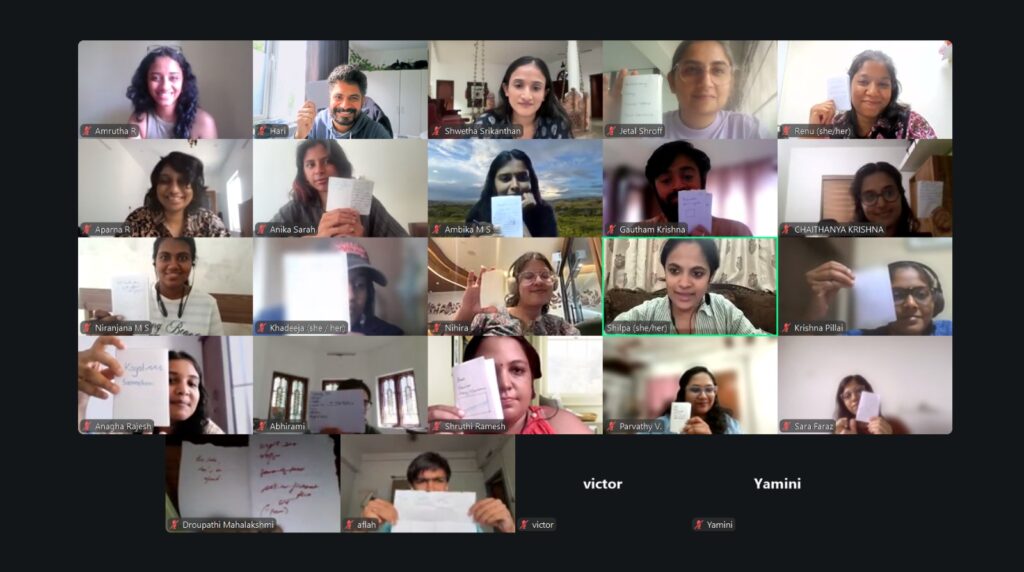
We are happy to release a two-part special issue over this month and next that will feature both workshop articles and general articles. Gautham Krishna, in his first published article, examines the uniquely modern phenomenon of ‘pooja rooms‘ in savarna (dominant-caste) Hindu households, offering a glimpse into how caste manages to thrive through transformations in the modern era. Ambika M S questions the absence of oceanic heroes from Kerala in our popular imagination and explores two literary works to set the ball rolling. Shruthi Ramesh, in her article titled “Ee Kadaltheeram Aarudeth?” ( Whose beach is it?), explores the right to the city and voices on the beach. In addition to the articles by our workshop participants, we also have Muhammed Munavver article that takes us through the film School Chale Hum (2025). This is Munavver’s second publication with us. Published earlier this year, his first Ala article was a take on the presence of libraries in Malayalam literature and cinema. The Writing Workshop was a perfect wrap-up to an eventful year for us at Ala, with the new team members taking the reins.
We also kicked off the year with a revamped Instagram page and increased online presence, thanks to our dedicated social media editor. We are excited to continue receiving a steady flow of Malayalam submissions. We look forward to widening our readership with our bilingual content. Apart from our usual practice of translating English pieces published on the blog into Malayalam (like this one and this one), we launched a new article series, Speaking Otherwise, which features translations of pieces from iconic magazines and newsletters from Kerala’s cultural and movement spaces in the yesteryears. By bringing these archives to a wider audience, we hope to initiate discussions and meaningful engagement around the contemporary relevance of these pieces. The first set of translations was chosen from Sanghaditha [Woman United] Magazine, a publication of Anweshi, an early women’s organization in Kerala active since 1993, led by activist and organizer K. Ajitha. We began with a 2013 piece where Arathi P M and Athira P M drew on their experiences defending domestic violence survivors in Kerala’s lower courts. This was followed by the translation of psychology researcher Tissy Thomas’s piece on how patriarchal norms shape masculine identity in ways that enable and perpetuate sexual violence. The final piece in the series featured the work of Lovely Stephen, one of the first activist-scholars in Kerala to articulate the politics of Dalit women’s rights. As we step into another busy year at Ala, we will continue the translation series by exploring newer—and older—archives. We heartily welcome suggestions from all our readers about potential archives.
It is encouraging to know that even while we aim to reach a wider public audience, we have been able to balance academic rigour and accessible presentation. We are thrilled to share that three of our articles and a podcast are now part of the Kerala University Undergraduate syllabus. Muhammed Anees T A’s piece on the ‘Kuzhimanthi debate’ in Kerala, S Harikrishnan’s analysis of couple and wedding photographs in Malayalam cinema, Priya Menon’s piece on the emerging genre of petrofiction in Kerala, and the much-loved podcast featuring a hearty and engaging conversation with scholar-activists Rekha Raj and Malavika Binny about the sartorial history of Kerala have found their way into the English syllabus. The podcast had already been part of Kannur University’s BA English syllabus last year. We are grateful to all our contributors and speakers for their trust, effort, and thoughtful engagement. We consider these milestones as encouragement to soldier on, come what may.
Each year has its own hits and misses, and we want to celebrate the misses too. We attempted to revive our podcast season this year, but it is still a work in progress. We have episodes under production, and we hope to move forward with them in the coming year. So, for fans of our podcast: please keep an eye out this year!
Over the past year, we have also worked towards expanding our digital presence. While social media is a complicated sphere, it is a way to reach people interested in issues related to Kerala but who may not have come across Ala just yet. We entered LinkedIn, which is an exciting place to meet researchers and academics. On Instagram, we’ve taken a design-first approach to reach broader audiences. We continued our collaborations with other like-minded platforms this year. We collaborated with Pink Lungi, a content platform widely popular in Kerala, which customised articles from Ala’s archive in a pop-culture format for their audience on Instagram. PinkLungi featured Mohammed Sadik’s insightful piece highlighting the lesser-known yet crucial Islamic heritage of Tirurangadi in north-central Kerala, and Shibu B S’s equally erudite and delightful history of pulp fiction, specifically the ‘painkili romance’ genre in Kerala. We also published an abridged version of an article from Himal Southasian Magazine, which also collaborated with Ala on our Writing Workshop this year. These efforts have meant Ala’s readership and engagement rates have increased year on year, with a 22% rise in the number of visitors to our page.
Turning 8 is no small feat for Ala. We would also not be able to continue the unpaid labour of keeping Ala going without the support of the many contributors who have been generous with their time and ideas, and have considered this an important platform to present their work and engage with that of others. It is this feeling that we take into our new year.
For feedback, comments, or to pitch ideas, reach us at contact@alablog.in or give us a shout-out on Twitter, Instagram, Facebook, or Linkedin.
– Aparna, Anjana, Amrutha, Hari, Nihira, Renu, and Shilpa


