
Annual road deaths number in the thousands in Kerala, yet a single wildlife fatality sparks a political crisis. Harigovind argues this disparity reveals how spectacle obscures systemic failures, and how the state uses wildlife conflict to distract from the structural violence killing those at the margins.
Harigovind Janaki Praseeda
In Kerala, there exists a grim and unwritten hierarchy of mortality. While the thousands of lives lost annually on the state’s highways are accepted as the mundane, statistical cost of modernity, a single death by a tiger or an elephant triggers an existential political crisis. This disparity, or paradox even, is not a quirk of hyper-visible media sensationalism. Rather, it is an insidious mechanism of distraction. This article argues that the hyper-politicisation of the spectacle of animal attack serves to obscure the far more insidious structural (systemic) failures at play. What follows is an examination of this disparity, how the outrage against the wild and the silence on road-related deaths mask the “slow violence” of institutional neglect, and how we bury the root causes of human-wildlife conflict in Kerala.
The Death
State records indicate that fatalities from road accidents reach into the thousands annually, far exceeding deaths resulting from human-wildlife conflict. For instance, in 2022, Kerala officially recorded 4,317 road accident fatalities, followed by 4,084 deaths in 2023. Despite ranking high in terms of the total number of accidents (48,091 recorded in 2023) Kerala maintains a lower severity rate (8.5 fatalities per 100 accidents) compared to the national average (36). This mitigating factor is often attributed to the state’s dense healthcare infrastructure and quick response capacity.

This massive, systemic mortality event is largely framed as a technical problem. Public attention often revolves around the failure of specific government mechanisms, such as poor road maintenance or lapses in law enforcement, or, most egregiously, the blame is shifted onto the victim and their actions. The judicial system intervenes to ensure accountability among engineers and officials regarding infrastructure upkeep. The critique, in this context, is directed at the state’s failure to execute a technical duty. These deaths, while numerically massive, are generally treated as matters requiring public infrastructure and policy adjustments, thus being functionally depoliticized and remaining removed from the intense, localized political friction that defines human-wildlife conflict.
In contrast to the thousands of road fatalities, human-wildlife conflict deaths are numerically smaller. Over five years, the total annual number of human deaths caused by wild animals in Kerala fluctuated between 88 and 114. Between 2021 and 2025, human interactions with elephants claimed 103 lives, wild pigs claimed 35 lives, and tigers claimed four lives. In the last 15 years, elephants alone accounted for 276 out of 1,527 human deaths from wildlife encounters. It is important to note that snake bites, which often do not generate the same political outrage as megafauna attacks, historically account for a large percentage of total wildlife-related casualties.
Despite the low overall figures, the political significance of human-wildlife conflict is high due to its concentrated nature. A significant portion of the conflict, 64% according to one study, occurs in the Wayanad region, which is a densely populated biodiversity hotspot. Agricultural lands abut protected zones in the region, creating intense friction points. The focus on megafauna fatalities, particularly those involving elephants and tigers, is crucial because these species are central to nationally sanctioned conservation programs (e.g., Project Elephant and Project Tiger). When these animals cause death, the conflict immediately becomes a direct political confrontation concerning state conservation policy and its impact on human safety. The death becomes a political event because it represents a failure of the modern state to contain the “wild”, a boundary historically established through the violent, exclusionary practices of the state and other dominant interests.
The political focus on human-wildlife conflict deaths, despite their numerical rarity, functions as a mechanism of selective attention. The fatalities are highly sensational and narratable. The story typically involves an identifiable and often dramatic antagonist—the wild animal. Unlike road deaths, which are perceived as chronic, expected, or attributable to diffuse systemic failures, human-wildlife conflict deaths manifest as acute, external crises demanding immediate state intervention. The state’s primary governance response is getting bodies like human-wildlife conflict to deploy immediate, technical, and centralised interventions like GPS tracking, drones, and Rapid Response Teams.
This rapid political and media mobilisation around specific human-wildlife conflict incidents serves a dual purpose. First, it satisfies the immediate public demand for decisive government action in the face of tragedy. Second, and more importantly, the hyper-fixation on “managing the animal” or installing rapid fixes like fencing, deflects public and political scrutiny away from the systemic, long-term policy failures that drive the conflict. Long-term political decision-making, which includes unsustainable land use policies, habitat degradation, and, most notably, the historical dispossession and failure to implement the rights of marginalised communities (mostly, indigenous people of origin) who are physically situated at the conflict frontlines. The narrative shifts from a critique of structural policy to a condemnation of the conservation effort or the perceived aggression of the wildlife itself.
The sensationalism of human-wildlife conflict deaths posits a paradox since indigenous and other forest-fringe communities, most impacted by the conflict, have for long been institutionally neglected.
The Mourning
The residents of Kerala’s human-wildlife conflict hotspots, such as Wayanad, which hosts approximately 150,000 indigenous people of origin, are the primary bearers of risk. These indigenous communities and long-term settlers who live near protected zones bear the brunt of human–wildlife encounters. Their vulnerability is a historical and structural consequence of systemic marginalisation, poverty, land alienation, and exploitation stretching back decades. The Adivasi’s rights to the forest and their socio-cultural identity are often disregarded by centralised, top-down governance mechanisms. We could term their lives as “unmournable,” as their suffering lingers, invisible to the broader political economy except when it impedes dominant interests.
Human-wildlife conflict deaths dramatically interrupt this institutional invisibility. When a death occurs due to an elephant or a tiger, the victim, previously relegated to the margins of society, achieves, even if temporarily, political visibility. This process of selective grievability allows the death to be leveraged for immediate political objectives.
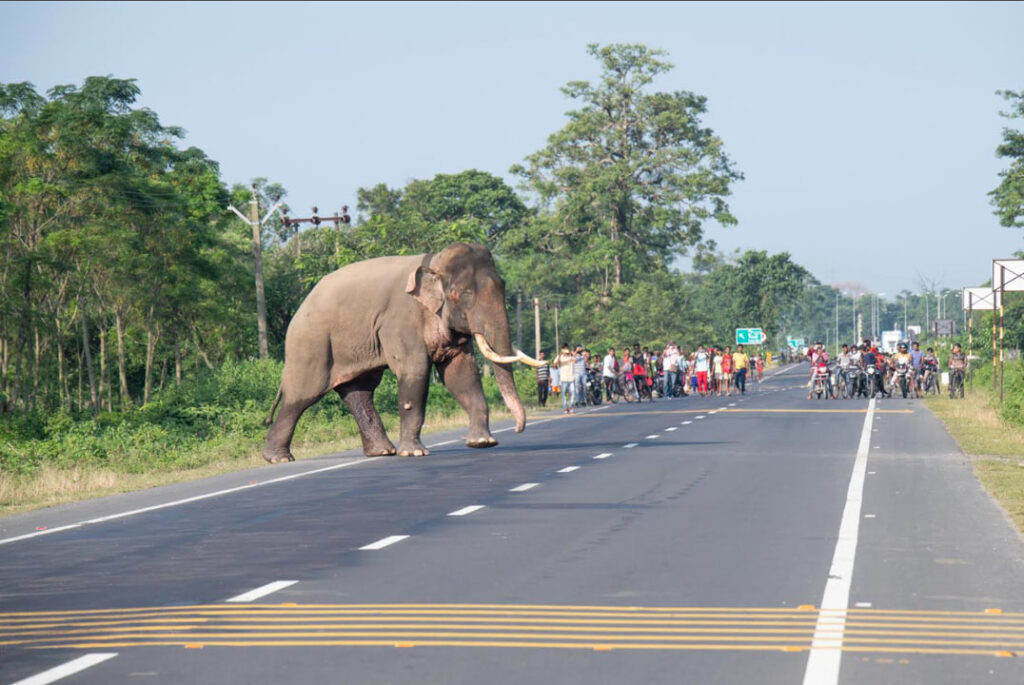
Media representations play a vital role in this amplification, often depicting the conflict through sensationalist headlines that frame elephants and other megafauna as “wilful aggressors” and the human resident as a pure victim. This powerful, visceral narrative generates public outrage and political mobilisation, narrowly focused on the immediate tragic outcome. However, this mobilisation rarely translates into a structural examination or restorative justice regarding the historical conditions—such as land alienation (the yet-to-be-finished land reforms) or failed implementation of tribal rights (FRA)—that pushed the victims into the precarious conflict zone in the first place.
This distinction between structural violence and sensationalised violence is crucial. A local person who dies due to a systemic health barrier, chronic poverty or even in a road accident is generally ignored by the state machinery. In contrast, the death of the same individual by a wild animal becomes a cause for public protest and rapid administrative action because it provides a clear, high-stakes narrative that highlights a failure to protect citizens from the wild, which is perceived as an acute failure of state control over its periphery. Wildlife-related human deaths intersect identity and mortality, underscoring that the vulnerability of these communities is simultaneously environmental, economic, and socio-political.
The Burial
The fundamental driver of human-wildlife conflict in Kerala is habitat degradation, fragmentation, and loss. Land use changes driven by population expansion and economic interests continually encroach upon traditional wildlife habitats and corridors. Specific activities identified as contributing factors include the diversion of forests for large-scale non-forestry purposes such as high-voltage electric lines, railway lines, highways, and industrial activities, as well as the conversion of grasslands into plantations.
In high-conflict areas like Wayanad, the encroachment of commercial agriculture plays a prominent role. Experts have highlighted how land use changes, particularly the widespread installation of electric fences around lucrative coffee plantations, restrict elephant movement. This action subsequently pushes elephants into unfenced villages and newer, previously unaffected areas, thereby escalating the conflict. This is not a random clash between humans and nature. Rather, it is a direct consequence of land-use planning that consistently prioritises commercial and infrastructural expansion over ecological integrity and the traditional resource base of forest-dwelling communities.
Moreover, the financial costs borne by households experiencing human-wildlife conflict are immense, and analyses indicate that compensation mechanisms are fundamentally inadequate. Studies across India, applicable to the high-cost species present in Kerala, demonstrate that the costs associated with human casualties (injuries and death) vastly outweigh losses from crop damage or livestock depredation. For households experiencing conflict with Asian Elephants, the cost of human casualties represents the overwhelming majority of the total estimated damage (approx. ₹3 million), while crop and livestock damages remain comparatively low (around ₹25,000).
Despite the Central Ministry enhancing the maximum ex-gratia relief for death or permanent incapacitation to ₹1 million, the slow bureaucratic execution of this system institutionalises and exacerbates the precarity of the victims. Audit findings reveal significant administrative deficiencies, including substantial delays in the payment of compensation. Furthermore, the system lacks basic transparency which has facilitated the misappropriation of funds. Compounding the problem, the assessment of loss is often arbitrary. The CAG Audit highlighted that in the absence of standardised benchmark rates for livestock based on category (age, milching/non-milching status), the valuation remains inconsistent and potentially unfair. Moreover, specific losses, such as poultry, woody crops, and certain agricultural products like coconut and arecanut, often lack clear provisions for claims.
The consequence of this systemic failure is that human-wildlife conflict fatalities transform an acute tragedy into chronic socio-economic hardship. Many vulnerable families in Kerala already face significant debt driven by health-related expenses. The delays, arbitrary valuations, and occasional fraud within the compensation system push surviving families deeper into debt and long-term precarity, fundamentally undermining the goal of conflict mitigation by failing to provide restorative economic justice.
The Eulogy
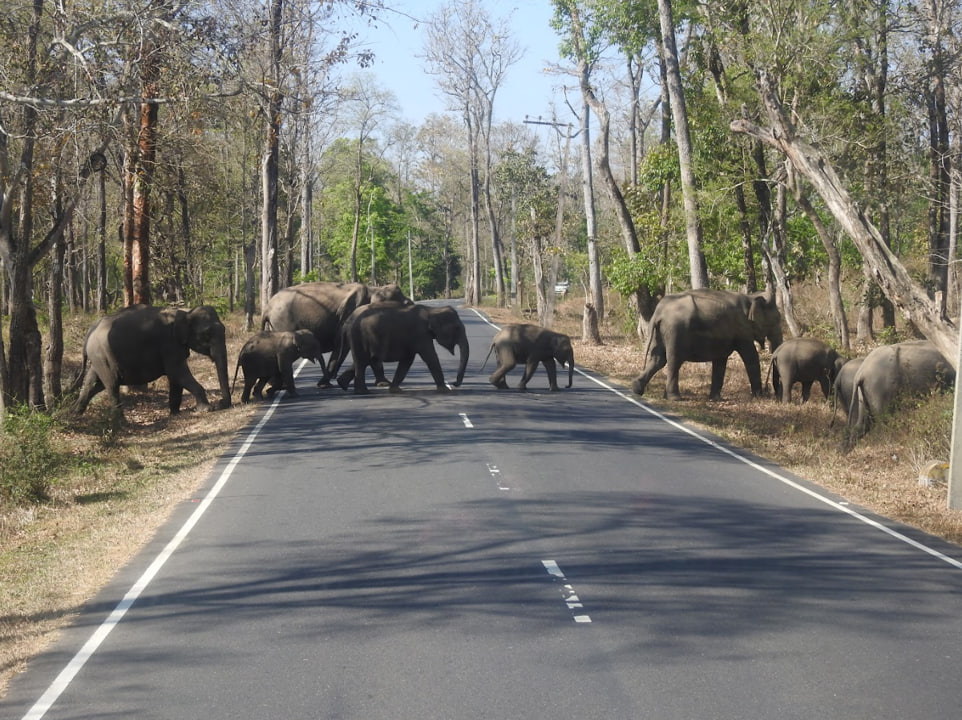
When the dust settles, we must admit that the “man-eating” tiger or the “rogue” elephant is a convenient fiction. It allows the state to perform the spectacle of protection—deploying RRTs, putting camera traps down, etc. Ultimately, the tragedy of Human-Wildlife Conflict is not just the violence of the attack, but also the silence that follows it. Once the media cameras leave and the political fervour dies down, the victim’s family is left to navigate the same “slow violence” of poverty and bureaucratic neglect that made them vulnerable to begin with. We offer them the spectacle of a hunt for the animal, but we deny them the dignity of fair compensation, land rights, or swift justice. There is a profound irony in how we court our dead. We accept thousands of road fatalities annually as the mundane cost of modernity, a “technical problem” to be managed, yet we treat a fraction of that number in wildlife conflicts as an existential crisis of the state.
This disparity reveals that our obsession with human-wildlife conflict is less about saving lives and more about our fear of losing control over the wild. But saving lives requires boring, unglamorous work: processing compensation claims on time, securing land tenure for Adivasi communities and including them alongside fringe-dwelling settler communities in decision-making, and planning thoughtful infrastructure. We need to stop treating these deaths as political theatre and start treating them as systemic failures. The dead deserve better than to be used as props in a drama about man versus nature. They deserve a system that actually works to protect them and their surroundings.
About the Author: Postgraduate Degree in Political Science from the University of Hyderabad. Currently, he works as a Field Officer at the Wildlife Trust of India. Interests include wildlife conservation, cultural anthropology, ethnography and literature.


