
From Sinbad and Odysseus to Capt. Jack Sparrow, we can easily recollect examples of oceanic heroes. They come to us without much thought and stay with us for their courage, their quirkiness, and their determination to reach the end of their voyages. But for a piece of land that has a historically rich oceanic history and relishes in the cultural connectivity of its coastline, why can’t Kerala’s popular imagination think of a Malayalee sea hero? It is this question that Ambika M S asks and answers by presenting three characters from two Malayalam novels–Thakazhi’s Chemmeen (1956) [but turns the lens away from the ever-so-familiar Pareekutty], and Soman Katalur’s Pulliyan (2022).
Ambika M S
“Human beings living on land nevertheless prefer, in their imagination, to represent their overall condition in the world in terms of a sea voyage.”
—Hans Blumenberg, Shipwreck with Spectator
From the Kochi-Muziris Biennale, which derives its name from two major maritime trade centres of Kerala, to the Kerala Literature Festival, which runs along the coastline of Kozhikode, to many other sea-centred cultural and artistic engagements that Malayalis enjoy in the present (even Ala, which is named to mean a ‘wave’ ;)), the Arabian Sea and the larger Indian Ocean that it is part of, are central to Kerala’s popular imaginations. There are discussion panels that unfailingly appear in every literary festival that are dedicated to themes of the sea, backwaters, estuaries, islands, monsoon and so on. While laying the groundwork for my doctoral research on Indian Ocean World writings, I developed a small habit. I began asking people to name Malayalam novels about the sea. Almost without exception, the first answer was Thakazhi’s Chemmeen 1. When I urged for more, most people either fumbled or surreptitiously started mentioning literature from other parts of the world that they are more familiar with.
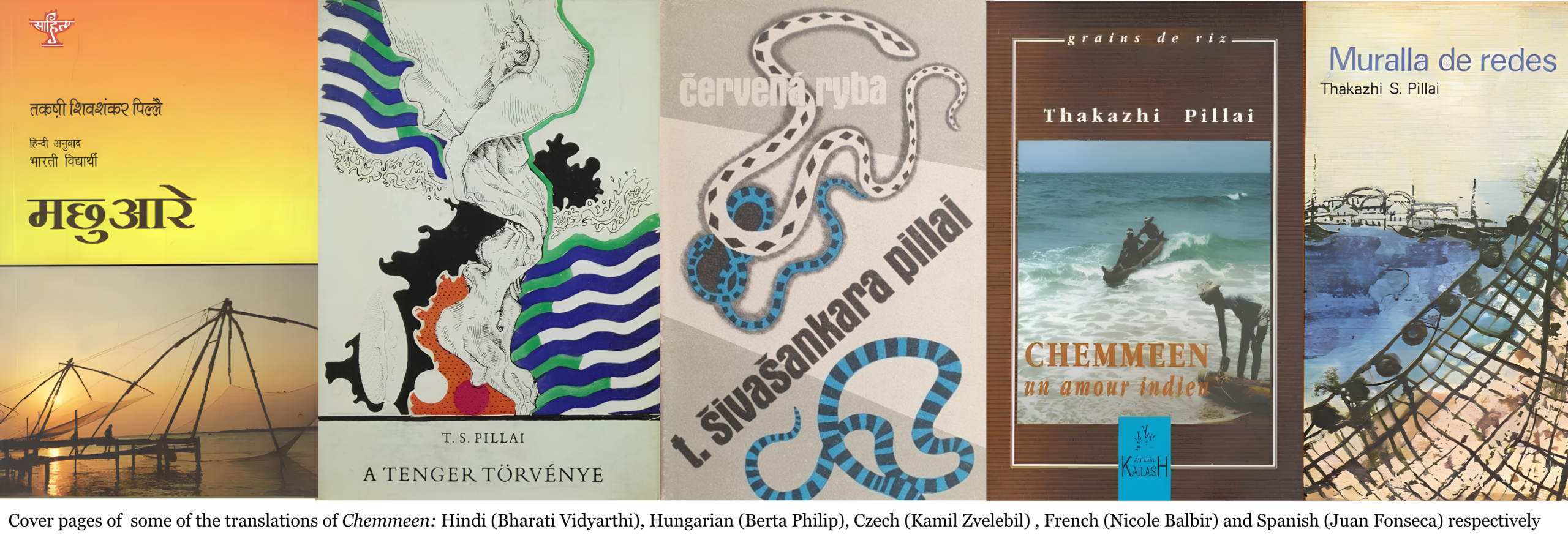
What started as casual conversations soon confirmed a suspicion that had emerged during my readings. Despite Keralam’s long and intimate relationship with the sea, its maritime, nautical, and oceanic novelistic imaginations remain surprisingly limited in public memory. There are numerous poems, songs, short stories and plays that characterise the sea as a significant element in the day-to-day life of Malayalee people. However, novels, having evolved as one of the most popular literary genres to lure readers permanently into the fictional worlds that the writers create, have somehow faltered in producing memorable sea-going or sea-faring protagonists in Malayalam literature. Novels such as Arabikkadaloram [By the Arabian Seashore] by U. A. Khader or Valakkaar [People with Nets] by Sarah Thomas, both of which narrativise the lives of fishing communities, hardly get any mentions. An average reader or a viewer would be familiar with Odysseus, Captain Ahab, Sinbad, “the old man”, Robinson Crusoe, Count of Monte-Cristo, or even Captain Jack Sparrow, Aquaman and Moana when it comes to imaginative representations, but, as seen above, falter when asked to go beyond Pareekutty, the beloved protagonist of Chemmeen. What makes some figures memorable, and why?
Perhaps it’s their adventurousness, or the desire to conquer the seas and thereby more territories, or a magical element that establishes human-non-human connections in exotic, endearing manners. Commenting on Achilles’ violent fight against the river god Scamander in Homer’s Iliad, Steve Mentz (2020, 23) notes, “the heroic image that the warrior creates, in which the need for victory overrides any environmental destruction it creates, has long-term resonance, up to and including the present day”. Wars that have ever been fought, whether in epics or in the real world, inevitably consist of humans wrecking the planet on which they stand, almost as a sidequest. From classic literature to the contemporary, across geographic boundaries and cultural landscapes, the relationship between humans and the sea has been intimate if not vexed. Water, especially the sea or ocean, has always been invoked in the craft of writing as a silent conspirator in various forms: metaphors, allegories, imagery, hypallages, pathetic fallacies, and as overarching foregrounds and backgrounds. The porous nature of water is something that allows humans to manifest not just their tactility, but also a wide range of emotions into the obliviousness of water. From countless fishermen who take to the turbulent waters for their livelihood, to the sailors and the marines who navigate through the tough seas under nationalistic hubris, to the oceanographers, hydrologists and marine scientists who dive through the murky waters to find answers, and most crucially, the thousands of “modern-day Jesuses”, as Dilip Menon (2022, 9) puts it, referring to the migrants who are forced to move across waters in search of better lives, salty whirls of precarity surround the contenders.
Many scholars note that both European and Indian Ocean traditions have historically imagined oceanic heroism through conquest, trade, and political authority rather than subsistence or vulnerability. It’s either a mytho-magical crossing of the sea or a step in an ever-expanding quest for power. That is why it is fascinating to look at whether Keralam’s literary imagination embeds any notion of a sea-hero across the years of the evolution of its prose fiction. Does it give us a sense of indigenous knowledge systems, as we see in writings from Oceania 2? Or does it present slices of life from a social-realist perspective?
As vast as it feels to answer these questions, I turned to two novels written nearly seven decades apart: Chemmeen (1956) and Soman Katalur’s Pulliyan (2022), both named after marine creatures – the prawn and the spotted ray, respectively. Although they differ greatly in style and theme, they are united by their portrayal of the fisherman’s intimate and often precarious relationship with the sea. Chemmeen is set in Neerkunnath (literally ‘on water hill’), a coastal village in southern Keralam where a tabooed romance drives certain tragic events, whereas in the northern Keralam coastal village of Kadalunkara (literally sea-land), the setting of Pulliyan, a series of vignettes traces a fisherman’s journey from boyhood to adulthood.
Thakazhi had had to endure incriminating allegations against him by various fishing communities for certain invented myths and the misrepresentation of their lives (Surendran). However, the forbidden love of Karuthamma, the daughter of a proud Hindu netsman, and Pareekutty, a Muslim fish trader continue to live on in the cultural memories of audiences across generations. But rather than dwelling on the tragiromance on the shore, I am going to turn your attention towards Chembankunju, Karuthamma’s father, and Palani, the fisherman whom Karuthamma eventually marries, sacrificing her love for Pareekutty. I argue that Chembankunju and Palani are the literary prototypes of the oceanic hero in Malayalam literature, as opposed to the popular attention given to the melodramatic Pareekutty, whose ‘heroic’ role is limited to “the man weeping on the shore” (the manasa maine trope) 3, as Mentz suggested (29).
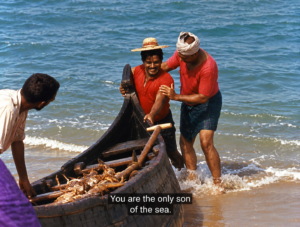
For Palani, the able-bodied, ‘rootless vagabond’ whom Karuthamma is married to, the sea is not simply the location of his labour; he is encrusted as the sea’s prince by his father-in-law, Chembankunju, the most competent boatsman of their shore. Just as much as how Chembankunju riding a boat was a marvellous sight to behold, Palani’s vigorous and lonesome ‘flying’ through the seas is seen as an evocation of the boundless force of man triggered by the desire for mastery over tempestuous waters. The restlessness of a fisherman who is forced to remain on the shore is evident in Chembankunju’s behaviour, “for [he] was a brawny fisherman who tussled with natural forces constantly and was a man whose life was dictated by the norms of that community” (Pillai 2011, 218). His actions, morality, and familial obligations are shaped by what the community expects of him. As much as his individualistic valorism is acknowledged and respected, he also cannot escape the collective imagination of the coastal village. Although every capable member of the community goes fishing to make ends meet, the rivalry amongst them for leading ‘the most dignified life’ was wrathful, and a potential threat to the reigning, undeclared hero of a locality.
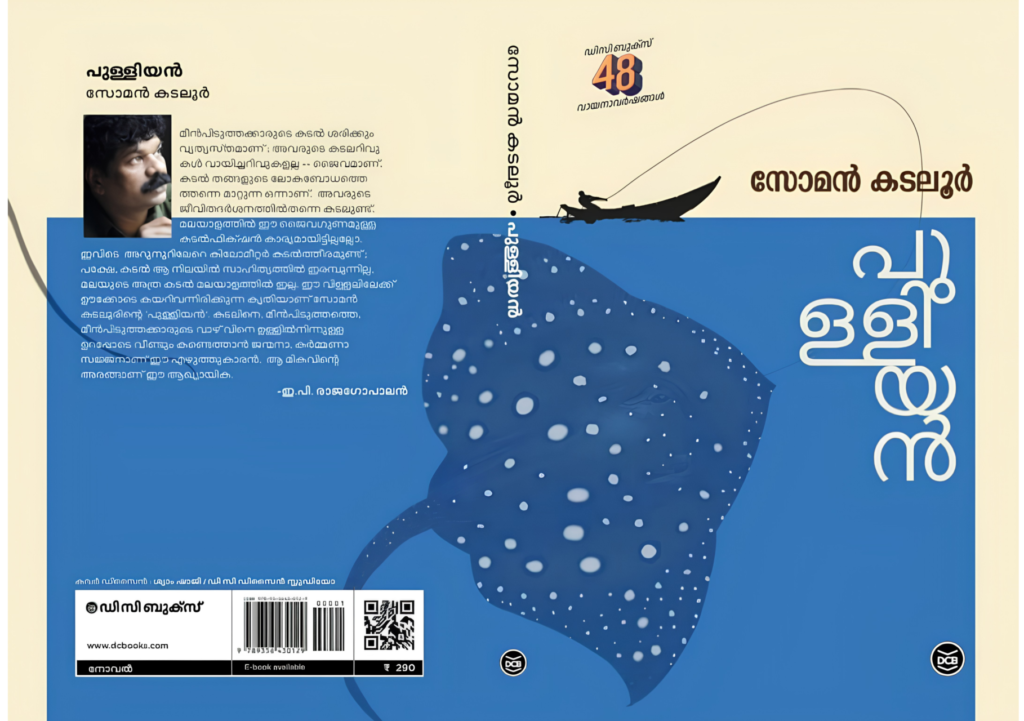
In Soman Katalur’s Pulliyan, the protagonist Chirukandan’s world is forged through tides and eddies of the sea around him, and the concurrent swells and collapses of the littoral memories he iterates to become an oceanic hero in the process. It is presented as a journey that he began when he was twelve years old. Chirukandan often contemplates, while braving through the massive waves in his artisanal fishing boat, about how he is living his land-life mostly through his memories, as he is a sea creature. He spends most nights floating on the sea and considers the night-sea as his body and soul (Katalur 2022, 16). There is an instance in Pulliyan where Chirukandan agrees to accompany Damu, an unsuccessful fisherman who pleads for his expertise in getting a good catch in the deep sea. Chirukandan helps, but only to deal with a thankless Damu. This wounds Chirukandan’s dignity and self-proclaimed sense of destiny as someone born to harpoon down the spotted ray and not engage in any other silly business: “In the temptation of the writhing bait at the end of a hook, at that enticing moment, in the midnight sea, a real man will come to lock horns with the spotted ray” (“എര പിടയ്ക്കുന്ന ചൂണ്ടയുടെ പ്രലോഭനത്തിൽ, വിലോഭനീയ നിമിഷത്തിൽ, കടൽപ്പാതിരയിൽ പുള്ളിയനോട് കൊമ്പുകോർക്കാൻ ആണൊരുത്തൻ വരും.”; Katalur 2022, 224). Chirukandan is confident that he fulfils the bodily and mental acuity required for such a combat against a force of nature. This primaeval sense pervades the novel, making it a vernacular story spun along the lines of Ernest Hemingway’s Old Man and the Sea.
Divided into 27 chapters, each titled with various sea-associated words, the novel is narrated in an almost tidal structure – moving up and down, back and forth, between lives and memories of characters who are directly and indirectly involved in the fishing livelihood of the people of the village. Life in the littorals is graphically brought out through descriptions of the sea, fishing, and livelihood. Even though the novel does not explicitly use the popular affectionate term kadalamma, or mother sea, it often alludes to the expansive waters as a womb. For instance, in the chapter titled “Ottanakshtaram” [The Lone Star], Chirukandan steps into a rainwater reservoir within the sea, which is called “ottakkallu” or the single stone: “Chirukandan lay down in the wetness of the womb of the rocks that were being crashed against by the waves, gazing at the sky” (“ചുറ്റും മഹാസമുദ്രം അലയടിച്ചാർക്കുന്ന പാറയുടെ ഗർഭത്തിന്റെ നനവിൽ ചിരുകണ്ടൻ ആകാശം നോക്കി കിടന്നു.”, Katalur 2022, 20) 4. We can read this into Pulliyan’s construction of the ocean space as the womb to which the protagonist frequently resorts. In creating a character like Chirukandan, Katalur explores the complex, evolving universe of a fisherman, and is akin to what Mentz describes as “our most ‘Oceanic hero’”: “the man who weeps on the beach, sails into the storm, and swims to shore” (Mentz 2020, 29).
Reframing oceanic heroism from the standpoint of artisanal fisher communities allows us to decenter the status quo on the epic-centred maritime narratives and recover submerged histories and imaginaries. Palani, Chembankunju, and Chirukandan are all driven by an unquenchable passion for gliding over the sea, winning the largest catch, and thus being the best man on the shore. By attending to the depiction of textures of everyday life along the regional Indian coasts–its rhythms, risks, and rituals– a nuanced reading of these texts shows us what it means to live heroically with the sea, carrying one’s self-esteem, pride and the valour of proximal living with a majestic natural environment.
Works cited:
Blumenberg, Hans. Shipwreck with Spectator: Paradigm of a Metaphor for Existence. MIT Press, 1997.
Chemmeen. Kanmani Films, 1965, Youtube, uploaded by FlixStar Movies, 10 Nov. 2024, https://www.youtube.com/watch?v=Tl7goEvsogw
Katalur, Soman. Pulliyan, D C Books, Kottayam, 2022.
Menon, Dilip M., et al. Ocean as Method: Thinking with the Maritime. Routledge, 2022.
Mentz, Steve. Object Lessons: Ocean. Bloomsbury, 2020.
Pillai, Thakazhi Sivasankara. Chemmeen. Translated by Anita Nair, Harper Perennial, 2011.
Pillai, Thakazhi Sivasankara. Chemmeen. DC Books, June 2025. Originally published in 1956.
Surendran, K. K. “Chemmeen that Gifted Me Both Good Fortune and Sorrow.” Chemmeen, by Thakazhi Sivasankara Pillai, translated by Anita Nair, Harper Perennial, 2011, pp. 248-251.
UNESDOC Digital Library. UNESCO, https://unesdoc.unesco.org/search/N-EXPLORE-fcc12c08-077e-46ac-a60e-b7234cdedf Accessed 24 Oct. 2026.
_________________________________________________________________________________________
About the author:
Ambika is a doctoral research scholar working in Blue Humanities at the Department of Humanities and Social Sciences, BITS-Pilani Hyderabad Campus. She spends a lot of time wondering why she chose to dive into literary texts instead of the actual marine world.


