
Through a close reading of the religious text Al Mawāhibul Jalīyah, Mohammed Afsal traces the ways in which the poet and orator Thazhava Usthad wove the language and experiences of everyday life into the construction of the Kerala Muslim self.
Mohammed Afsal K
While delving into the literary landscapes of Kerala Muslims, we may never encounter epic poems like Shahnama or Masnavi.1 Instead, we will be welcomed by Malas, Mawluds,2 and other devotional works such as Al Mawāhibul Jalīyah. What are these texts? How are they different from the epic and spiritual poems that are more popular among Islamic writings and literature? What have they come to mean for Islam in Kerala? This article is a result of these questions and offers a glimpse into the world of Kerala’s Islamic writings.
Malas, Mawluds and Islam in Kerala
Since its early ages, Islamic poetry and literature have played a significant role in developing an understanding of the religion, its tenets and practices. From Arabia to the far Eastern regions of the globe, Islam has voyaged through language.3 Literary networks throughout the Arab and Persian cosmopolises and beyond connected Muslims across space and culture, translating Arabic Islam into localised versions for different contexts. Over time, these evolved to encompass a wide range of subjects, including Sufism, mysticism, law, and grammar (Ricci 2011). Malas, Mawluds, and other texts, such as Hidāyat al-adhkiyā’ ilā ṭarīq al-awliyā (written by Shaikh Zainuddin Makhdum, 1467-1552) and Al Mawāhibul Jalīyah (written by Thazhava Muhammed Kunju Moulavi), are products of such literary and religious endeavours, and they constitute the Islamic literary tradition in Kerala.
Muslims in Kerala have produced works in Arabic and Arabi-Malayalam4 in the same century in which Thunchaththu Ezhuthachan (who became the father of modern Malayalam) wrote Krishna Gatha.5 Malas, recognised as the earliest writings in Arabi-Malayalam, are devotional poems praising the Prophet. Beginning with Muhyiddin Mala in 1607, followed by Ahmadul Kabeer Rifa’ Mala (1623), Usvath Mala (1628), and Valiya Naseehath Mala (1678), the Malas represent a flourishing literary period that reflects the diverse linguistic and cultural heritage of Kerala Muslims in the 1600s. Unlike the rich imagery and elaborate artistic expressions of Persian and Arabic literary works, these Islamic texts prioritise religious content in poetic meter, serving as tools for memorisation and recitation more than artistic exploration. Al Mawāhibul Jalīyah is one such poetic work recognised for its distinctive narrative and lyrical style. It is this text that I will be taking up in my article.
Thazhava Usthad: The Extempore Poet
Although he was officially “Thazhava Muhammed Kunju Moulavi,” it was a different name that resonated with the people. With a reverence that speaks volumes, he was, and still is, “Thazhava Usthad”— a poet extempore who began writing at a remarkably young age. Usthad wove Arabic meters into the lyrical flow of Malayalam, creating verses that were beautiful and inspiring. His compositions, rather than delighting in complex linguistic displays, steadfastly emphasised Islamic moral values, rendering them accessible through his simple narrative style.
He drew upon common words from Arabic, English, and Urdu, thereby forging a unique poetic form within Malayalam. The use of a Malayalam dialect and an accessible style makes his works relatable and impactful among Kerala Muslims. His poems often reflect on religion and everyday life, focusing on Islamic teachings rather than linguistic intricacies. As he once pointed out, “Arabic words weave through the text – their meanings and tales elegantly shared” (my trans.).6 The way he casually trod between English and Urdu is reflected in the following lines:
Maṇiyilla rabbe vāṅguvānā vēēdu –kothiyuṇdu vallātheppāyuṁ athinōde
athilekkū neeyoru pāss tā hannānē –athu ninte pakkal mātraṁā dayyānē
Yah Rabb, I want to buy that house, but there’s no money for me…
Give me a pass to it, Ya Hannan, it’s only with you, Ya Daian (my translation)
In this manner, Usthad possessed a rare genius for merging the familiar with the new, the complex, and the unfamiliar.
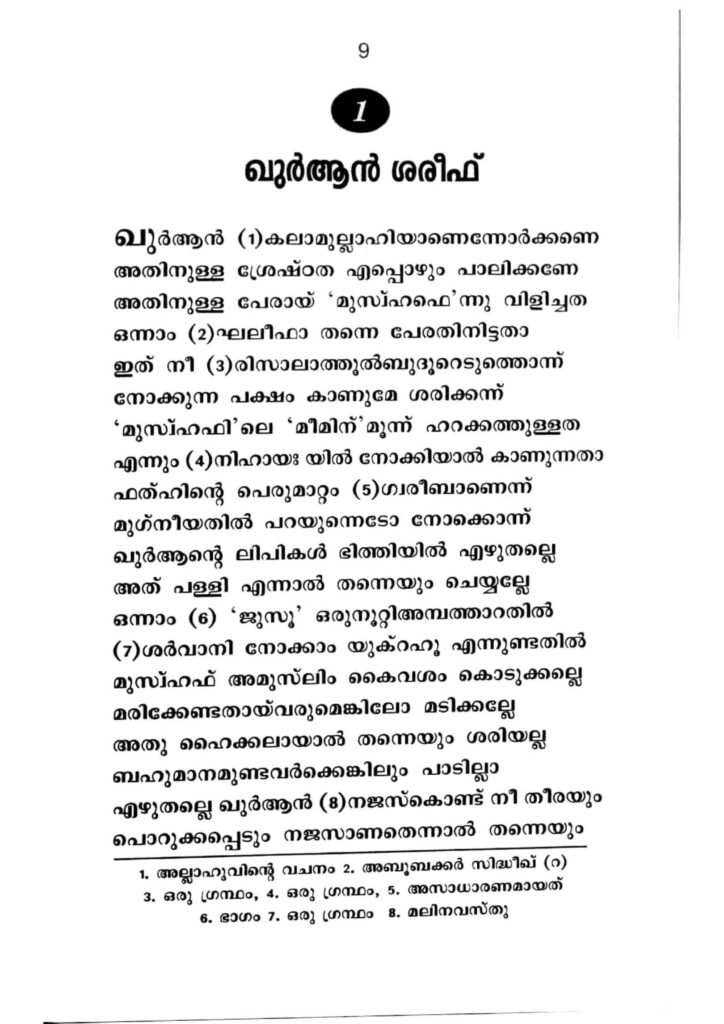 As a scholar, his deep knowledge of jurisprudence, Tasawwuf, and broader Islamic studies permeated his every written word. The journeys he undertook delivering sermons and lessons from Thazhava to parts of Malabar profoundly shaped his poetic vision. His poetry was an extension of his speeches and scholarly engagements, carrying the weight of his extensive learning. The use of citations after each statement and the addition of footnotes with detailed references to other Islamic texts are the distinguishing characteristics of his texts.
Every argument has citations from traditional texts and the Shafi juridical perspective.7 In the chapter “Death: A Contemplation”, he articulates it in the following manner:
ശറഫുള്ള രാജ്യത്തിൽ മരിക്കൽ നല്ലത
അതിനാഗ്രഹം ജനിക്കുന്നതും ഖൈറുള്ളതാ
അ സ്നൽ മത്താലിബ് നോക്കിയാൽ കാണുന്നത
ഇരുനൂറ്റി തൊണ്ണൂറ്റെട്ട് ഒന്നിൽ വന്നതാ
To die in a blessed land is good,
And to desire it is also noble.
You’ll find this mentioned in Asnal Mathalib,
Specifically, in 298:1. (my trans.)
In these lines, he describes the significance of dying in a blessed land. It is considered a great blessing, and the desire for such a death is a noble virtue. Even if one does not die in such a place, the sincere longing for it is still rewarded. To support this, he refers to the book Asnā al-Maṭālib bi-Sharḥ Rawḍ al-Ṭālib by the renowned scholar Imam Zakariya Al Ansari. As we can see, he not only cites the title of the work but specifies the book and volume from which it is drawn.
Thazhava Usthad’s distinctive style as a preacher and writer earned him a prominent place in 20th-century Kerala’s religious landscape. His well-structured speeches, typically limited to two hours, began with an introduction to the topic, drew upon the Quran and Hadith, and discussed performative rituals (A’mal), supplementing them well with poems and popular references. This structured approach is also evident in Al Mawāhibul Jalīyah.
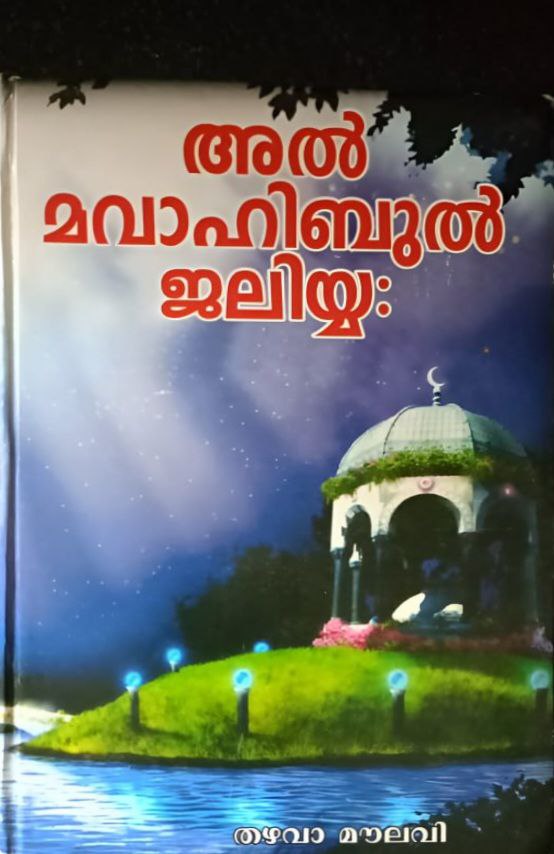 Al Mawāhibul Jalīyah
Even though the poet was known for writing poems quickly and spontaneously, Al Mawāhibul Jalīyah is an exception. It took him many years to finish writing it (Al Ziyarah). Primarily written in Malayalam, it encompasses 154 distinct topics, ranging from the Holy Qur’an to Paradise. He chose a specific rhythm known as the Keka Vritta meter. Twenty-two thousand pairs of verses are spread across ten books, which together constitute Al Mawāhibul Jalīyah.
Usthad’s text encompasses a broad spectrum of religious knowledge, with a focus on Fiqh (Islamic jurisprudence), Aqidah (foundational beliefs), Tasawwuf, and other historical contexts. The work’s subject matter is diverse, spanning Quranic studies, daily rituals (such as Dua, Ablution, and Aadab), fada’il (the merits of actions), and moral guidance. Topics often shift abruptly, making each subject a distinct and independent unit. All the chapters begin with the subject’s etymological analysis, supported by Quranic and Hadith citations. If a chapter is related to jurisprudential issues, then there is an introduction to his views on the law, and the manners (Aadab) and merits associated with it.
Often recited during wa’z, a practice where preachers address Muslim audiences on Islamic ideas in a poetic and engaging manner, Al Mawāhibul Jalīyah stands out for its use of storytelling, narrative analogies, and usage of Arabic poetic styles like Saja’ and Qafiyah.8 The text begins by emphasising Quranic recitation, then transitions to the practical aspects of daily life and culminates in vivid descriptions of Jannah (Paradise). Thus, with its merging of religious and everyday life, the text’s scope and style reflect its enduring significance for the community.
All the chapters conclude with a dua seeking Allah’s forgiveness and blessings upon the Prophet. The excerpts from the chapters “Qabar” and “The Rules of Ablution” show us this thematic consistency. In “Qabar” (Grave), he writes:
Ya Ilahi, make my grave a place of bliss,
My Deeds should be made worthy of it.
Blessings be invoked upon the Prophet and his family,
And upon the companions to the end of their lives and on their graves (my trans.)
He asks Allah to make his grave a peaceful and comfortable place. At the end, he recites the swalath (prayer) for Prophet Muhammad and his family. In the chapter “The Rules of Ablution”, he writes:
Ya Rabb protect us from the trouble of “Valhan”
And remove all Iblises.
May blessings be upon the purest of men and his companions
Throughout the time the ablution is practised (my trans.)
The poet seeks protection during ablution from spiritual doubts and confusion. The consistent invocation of the blessings upon the Prophet and his companions reinforces the integration of ritual purity with reverence.
Al Mawāhibul Jalīyah not only discusses Islamic concepts but also explores how to integrate these themes in shaping the Muslim mind. Thazhava’s critique of tobacco consumption, particularly beedi smoking, demonstrates a crucial integration of Islamic theological discourse into the social practices and concerns of twentieth-century Kerala. Acknowledging the prevalence of smoking, he strategically situates the practice within Islamic religious and moral frameworks.
From early morning, they start to smoke the beedi.
On seeing it, they immediately say, ‘Bring that beedi’;
If a half-smoked beedi falls, children pick it up.
Smoking these half-smoked beedis, their faces become dull.
If you attend a wedding feast,
A beedi is the immediate welcome you receive.
From the smell, women also crave the smoke,
Now they, too, are openly smoking it. (my trans.)
He argues that tobacco’s malodorous properties create spiritual impediments for believers by repelling angels and obstructing divine benediction.
It is said that beedi tobacco sprouted where Satan urinated.
The one who urinates, Iblis, is the one who discards it.
You place it on your lips and inhale.
Once Satan’s urine runs out,
You will no longer have beedis.
Thazhava combines religious ideas with real-life health and social concerns regarding tobacco smoking. While condemning the smoking practice, he also pays attention to details like how children come into contact with tobacco waste and how it influences others as well. By framing beedi tobacco as originating from Satan, he strongly warns against it in a way that people would feel hesitant to use it. He turns public health issues into religious responsibilities, demonstrating how Islamic teachings can address modern problems without compromising their core beliefs. His work is an example of how religious thought can address social challenges.
Al Mawāhibul Jalīyah demonstrates that the devotional literature and practices of Kerala Muslims are not merely expressions of faith but transformative texts that influence selfhood and identity formation among Kerala Muslims. It is a poetic composition that articulates the depths of Islamic life in Kerala in an accessible and popular language, skillfully blending Arabic rhythm with Malayalam poetic style. Each verse, which voices the theological and ethical sensibilities of its time, sheds light on the lived religious experiences of Muslims in Kerala.
This article offers only a brief glimpse into Al Mawāhibul Jalīyah and the vast world of Islamic literature in Kerala. A close reading of this text and its traditions will enable us to gain an appreciation of how the Muslim community in Kerala has navigated and negotiated its place within the broader Islamic world and its immediate sociocultural context, thereby contributing to a rich and diverse intellectual and cultural legacy.
Works cited:
- “#alziyarah #thazhava_usthad ശൈഖുനാ തഴവാ ഉസ്താദ് (ന:മ)|Vlog-275,” poster April 16, 2022, by Al Ziyarah, YouTube, 10 min., 46 sec., https://www.youtube.com/watch?v=bI-qBleq0Zo.
- Ronit Ricci, Islam Translated: Literature, Conversion, and the Arabic Cosmopolis of South and Southeast Asia, University of Chicago Press, 2011. p. 24.
Author Bio: Mohammed Afsal K is a research scholar in the Department of Civilizational Studies, Darul Huda Islamic University.


